
Introduction to Agarwood
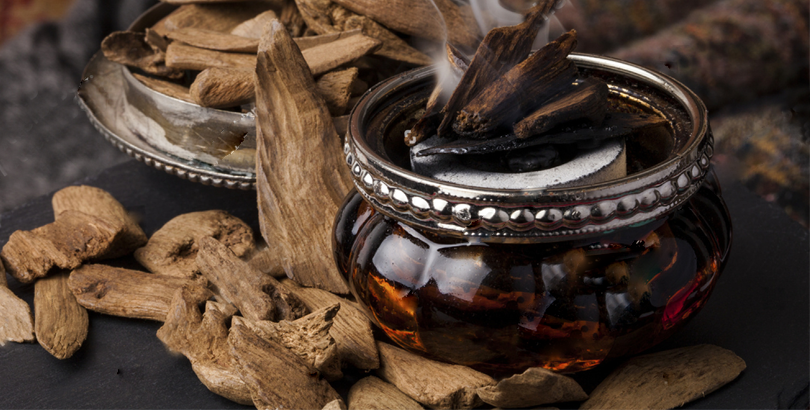
Agarwood is reputed to be the most expensive wood in the world. There are many names for the resinous, fragrant heartwood. Most commonly, the resin is known as agarwood, aloeswood, eaglewood, gaharu, agalocha or oudh (In Arabic).
Agarwood has been used to make high quality incense since centuries. The Chinese describe its smell as "a sweet, deep but balanced fragrance" and use it in religious and festive celebrations, and so do Arabian, Indian and Japanese people. Agarwood is also part of many traditional pharmacopoeias, dating back to medieval times and Chinese doctors still prescribe it for colds and disgestion problem. Oil extracted from agarwood is used in Arabian countries as a perfume.
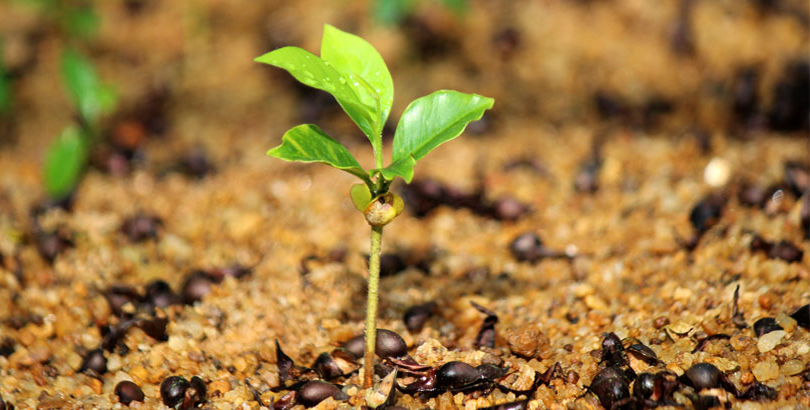
The trees of Agarwood grow to 6-20 m tall. The leaves are alternate, 5-11 cm long and 2-4 cm broad, with a short acuminate apex and an entire margin. The flowers are yellowish-green, produced in an umbel, the fruit is a woody capsule 2.5-3 cm long. At least fifteen species of Aquilaria trees are known to produce Agarwood.
Aquillaria Malacenensis is considered to be the queen of oudh. This tree can grow about 40 M or 131.23 ft in height with its diameter 80 cm. It is the best producer of agarwood resin and oil.
Agarwood is exported in various forms (wood chips, powder, oil and as finished products such as perfumes, incense and medicines), and the main importers are countries in the Middle and Far East - in particular the United Arab Emirates and Saudi Arabia (where agarwood is known as oudh), as well as Hong Kong, Taiwan and Japan.
Uses of Agarwood
An important use of agarwood is the production of incense. Agarwood is an aphrodisiac, both in oil form, and as incense. These are generally topical uses but the oil is also sold in Vietnamese pharmacies for internal use with the same goal. Chinese medicine uses powdered Aquilaria as a treatment for cirrhosis of the liver and for other medicines. It has also been used as a treatment for lung and stomach tumors.
Agarwood is a resinous heartwood that occurs in trees belonging to the species of Aquilaria, Aetoxylon (A.symeatalum) and Gonystylus genus of Thymelaeceae family. However, species of the genus Aquilaria are mostly known for the production of agarwood - it's a fast growing, evergreen trees.
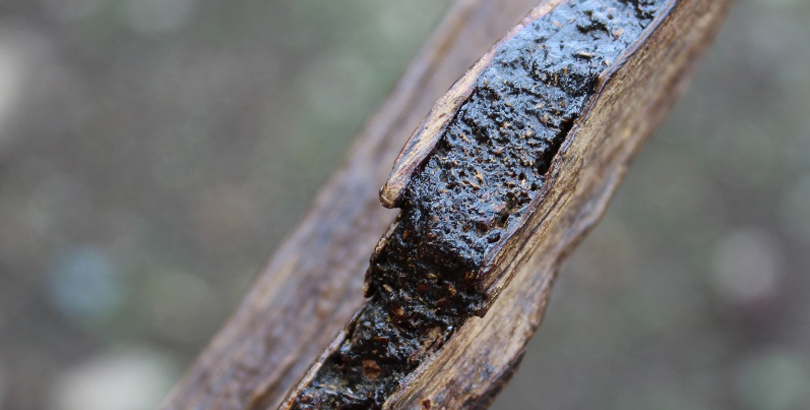
Agarwood or oudh forms as a reaction to fungal or bacterial attack. Trees, ocassionally become infected with a parasite mould secrete a fragrant, protective oil into wounded areas (roots, branches or sections of the trunk), which gradually become harder and dark brown to black. The heartwood (central part of a tree, which is darker in color than the sapwood) is relatively light and pale color before infection.
Aquilaria species that produce agarwood are found throughout Asia, while occur naturally in South and Southeast Asia. The Indian sub-continent was the main source of agarwood for many centuries but as trees became scarce in the middle of the twentieth century, extraction intensified in Indochina. Later on it was extended to Indonesia and Malaysia.
The major difference in fragrances of oudh oil and synthetic oudh can be distinguished easily. Oudh smells heavenly, woody and balsamic and surrounds a warm aura of bitter sweet and woody nuance. Whereas, synthetic oudh smells plain woody, leathry and lacks that warm balsmic aura. This is the main reason why growing Agarwood trees could be a smart commercial enterprise
Why is Agarwood precious?
nullam dolor potenti facilisi Platea porta posuere pulvinar neque facilisi pulvinar. Vehicula dolor viverra porttitor pulvinar augue sociosqu leo maecenas. Ad ut etiam placerat placerat potenti lacinia nascetur aliquet commodo.
- Distillation of Agarwood produces Agarwood oil famously known as "Oud". Oud is a very valuable oil because of its use as a key ingredient in some of the most expensive fragrances in the world. All the elite perfume brands namely Versace, Calvin Klein, Hugo Boss have premier fragrances featuring Oud oil.
- Due to limited supply and increasing demand, high grade Agarwood chips sell for over USD 10,000 per kg and distilled 'Oud oil' has sold for over USD 50,000 per kg.
- The current market for Agarwood products including Oud oil is estimated to be around USD 12 billion and growing rapidly. It is expected to exceed USD 36 billion in 2020.
- Taiwan and Japan, two of the largest importers of Agarwood import more than 50,000 tonnes annually. Their purchase value is in excess of 3 billion USD per year.
- But the most important market for Oud is the Middle-East. Saudi companies have retail outlets across 35 countries and their customer base runs in multiple crores. Their market worth is USD 6.3 billion annually.
- Because of strict growing constraints Agarwood farmers are able to supply only 20 percent of the world's demand and therefore it's price is seen to be multiplying year after year.