
Introduction to Bananas
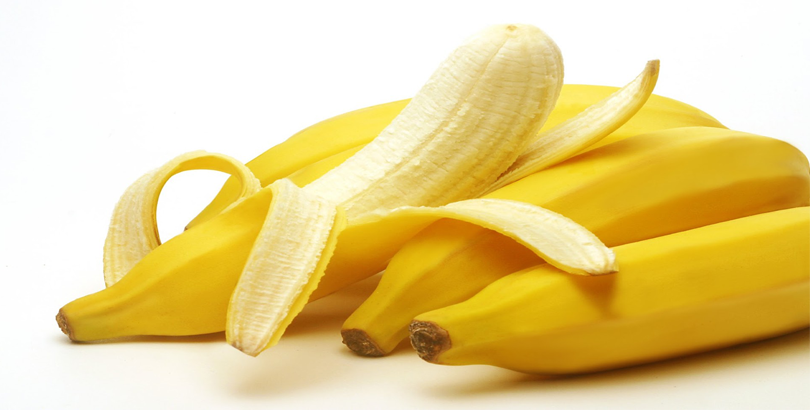
Bananas are the staple food for some 400 million people in the developing countries. Of all the fruits, it holds first place by production volume and is among the five most consumed fruits on the planet.
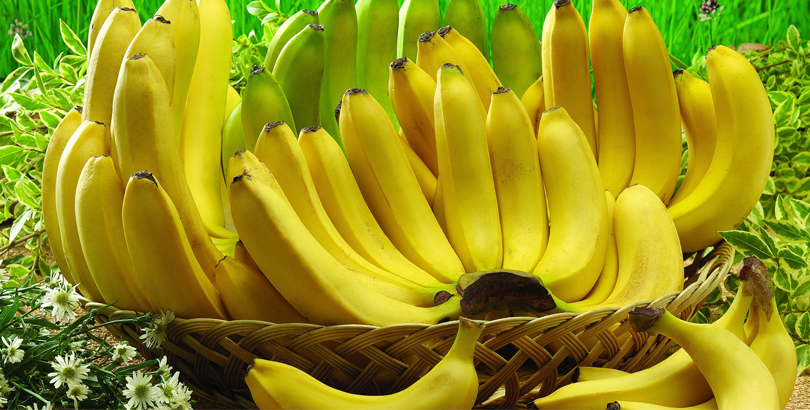
The banana plant grows up to 10 to 26 feet in height and belongs to the family Musaceae. Banana fruits grow in clusters of 50 to 150, with individual fruits grouped in bunches, known as “hands,” of 10 to 25 bananas each.
The Banana fruit is the most popular fruit in the world. It's versatility makes it the useful for farmers and consumers alike. The banana is, in fact, not a tree but a high herb that grows up to 15 metres. It is believed that there are almost 1000 varieties of bananas in the world, subdivided in 50 groups. The most commonly known banana is the Cavendish variety, which is the one produced for export markets.
The wide use of Bananas can be seen from the following statistics. Bananas are grown in more than 150 countries, producing 105 million tonnes of fruit per year. The bananas grown for local consumption are generally grown in traditional, extensive systems. Dessert bananas account for 43 million tonnes per year and are of huge economic importance for many countries in the South. Cooking bananas (plantains and others) account for 45 million tonnes. Bananas are a staple food in many tropical countries where they play a major role in terms of food security. Bananas are thus grown for both exports and local consumption.
The earliest written reference to banana is in Sanskrit and dates back to around 500 BC. Bananas are suspected to be the first fruit in the earth by some horticulturists. Their origin is placed in Southeast Asia, in the jungles of Malaysia, Indonesia or Philippines, where many varieties of wild bananas still grow today. Africans are credited to have given the present name, since the word banana would be derived from the Arab for ‘finger’. They started to be traded internationally by the end of fourteenth century. The development of railroads and technological advances in refrigerated maritime transport subsequently enabled bananas to become the most important traded fruit in the world.
Bananas are the fourth largest fruit crop in the entire world. The Banana is one of the major and economically important fruit crop of Asian countries. Banana occupies vast area among the total area under crop cultivation in Asia region. Most of Banana is cultivated by planting suckers. As technology development in agriculture is very fast, it results in developing tissue culture technique. Growing bananas does not require much effort but to achieve high yields or production requires dedication, farm management skills, and proper planting methods.
Banana plant belongs to the family of “Musaceae and genus of “Musa”. Bananas are indigenous to the tropical portions of India, Southeast Asia and northern Australia. Basically banana plants are not trees but giant herbs, which reach their full height of between 10 feet and 20 feet after only a year. Every banana blossom develops into a fruit and ripe enough for consumption after about 4 to 5 months. After producing banana fruit, the plant stems die off and they are replaced by new growth. The number of bananas produced by each plant varies based on fruit variety and other factors.
Besides being consumed as a fresh fruit, Banana leaves are used worldwide as cooking materials, plates, umbrellas, seat pads for benches, fishing lines, clothing fabric. The banana plant thus has multiple commercial uses.
Nutritional advantages of Banana
- Bananas help overcome depression due to high levels of tryptophan, which is converted into serotonin -- the happy-mood brain neurotransmitter.
- Eating two bananas before a strenuous workout packs an energy punch and sustains your blood sugar.
- Protects against muscle cramps during workouts.
- Counteracts calcium loss during urination and builds strong bones.
- Improves your mood and reduces PMS symptoms as it regulates blood sugar and produces stress-relieving relaxation.
- Bananas reduce swelling, protect against type II diabetes, aid weight loss, strengthen the nervous system, and help with the production of white blood cells, all due to high levels of vitamin B-6.
- Strengthens your blood and relieves anemia.
- High in potassium and low in salt, bananas are officially recognized by the FDA as being able to lower blood pressure and protect against heart attack and stroke.
- Being rich in pectin, bananas aid digestion and gently chelate toxins and heavy metals from the body.
- Bananas act as a probiotic, stimulating the growth of friendly bacteria in the bowel. They also produce digestive enzymes to assist in absorbing nutrients.
- High fiber in bananas can help normalize bowel motility.
- Bananas are soothing to the digestive tract and help restore lost electrolytes after diarrhea.
- Bananas are a natural antacid, providing relief from acid reflux, heartburn, and GERD.
- Bananas are the only raw fruit that can be consumed without distress to relieve stomach ulcers by coating the lining of the stomach against corrosive acids.
- Eating bananas helps prevent kidney cancer, protects the eyes against macular degeneration and builds strong bones by increasing calcium absorption.
- Bananas make you smarter and help with learning by making you more alert. Eat a banana before an exam to benefit from the high levels of potassium.
- Bananas are high in antioxidants, providing protection from free radicals and chronic disease.
- Eating a banana between meals helps stabilize blood sugar and reduces nausea from morning sickness.
- Rub a bug bite or hives with the inside of the banana peel to relieve itching and irritation.
- Controls blood sugar and avoids binging between meals.
- Eating a banana can lower the body temperature and cool you during a fever or on a hot day.
- The natural mood-enhancer tryptophan helps to relieve Seasonal Affective Disorder (SAD).
- Bananas contain high levels of B-vitamins as well as potassium and magnesium to speed recovery from the effects of withdrawal.
Major Producers of Bananas
There are several countries which are in produce bananas due to it's health benefits. India is the no.1 producer of banana in the world. The other top producers of banana are . India, China, Uganda, Philippines, Ecuador, Brazil, Indonesia, Colombia, Cameroon and Tanzania.
Many varieties of banana are grown across Asia. However, some of the popular varieties of banana are Red banana, Nyali, Safed Velchi, Basarai, Ardhapuri, Rasthali, Karpurvalli, Dwarf Cavendish, Robusta, Monthan, Poovan, Nendran, Grandnaine, Karthali, Dwarf Cavendish, Robusta, Monthan, Poovan, Nendran, Red banana, Nyali, Safed Velchi, Basarai, Ardhapuri, Rasthali, Karpurvalli, Karthali and Grandnaine, Emas, Rastali, Raja Awak, Abu, Nangka and Tanduk. Out of all these, Grandnaine is gaining popularity and may soon be the most preferred cultivar as the quality of its bunches is the best and also due to its tolerance to biotic stres.
Being a tropical crop, Banana grows well in temperature range of 14°C to 38°C with RH regime of 75% to 85%.Bananas need warm climate, adequate moisture and protection from wind. Chilling injury occurs at temperatures below 12°C. The normal growth of the banana begins at 18°C, reaches optimum at 28°C, then declines and comes to a halt at 38°C. High velocity winds which exceed 80 km/hr damage the banana crop.Although Bananas grow best in bright sunlight, higher temperature can cause sun scorching.
If you are planning to start a commercial banana farm, it is advisable to go for soil test. Banana can be cultivated on wide range of soils. However, rich, moisture and well-drained soils with 45% clay, 70% silt, 80% loam are best for its growth. Banana plants prefer a more acidic soils with pH between 6 .5 to 7.5. Soils with low pH value make banana plants more susceptible to Panama disease. Sandy, salty, nutritionally deficient and ill-drained soil, low laying areas, black cotton soils with poor drainage should be avoided for banana farming. Supplement the soils which are deficient in nutrients with organic matter before planting the Banana trees. Banana plants require thick mulching for retaining the water and this process should be repeated as often as possible. Banana plants are very sensitive to waterlogging, because its roots will rot. By planting the banana in raised beds, the problem of waterlogging can be resolved.
Banana plantation requires a well manured field. Therefore growing green manuring crops like cowpea and burying it in the soil before the planting the banana is beneficial. The main field should be levelled and made weed free by giving it 3 to 4 ploughings and using harrow or rotavator or any suitable agriculture equipment to bring the soil to fine tilth stage. During the final plough, apply well rotten farmyard manure (FMY) as a basal dose in the soil and make sure it will be mixed well into the soil. A required pit size of 45 x 45 x 45 cm should be dug.
These pits should be re-filled with topsoil along with well-decomposed farm yard manure of (FMY), 250 grams of Neem cake, and 20 grams of conbofuron. For better aeration and to prevent any soil borne diseases, these prepared pits should be exposed to sunlight for some time. This also kills any harmful insects. Planting can be done in furrows or in case of saline or alkali soils having pH above 8.0, the pit mixture should be modified to incorporate organic matter. Adding more organic manure will reduce the salinity and help yield a good crop.
Suckers weighing approximately 500 to1000 grams are commonly used in propagating. The best way is to start with tissue culture plantlets. Tissue culture plantlets are recommended for planting because suckers, in general, are infected with some soil-borne pathogen and nematodes. Similarly due to the variation in age and size of sucker the crop will not be uniform, harvesting of the crop will be prolonged and crop-management becomes very difficult. Hence, tissue culture plants are recommended for planting.
For higher crop yield of the orange plant, carrying out regular intercultural operations is important. As part of this, weed growth should be controlled by mulching. Regular ploughing must be done between tree rows for removing grass weeds. Spading of tree basins should be carried for proper soil aeration and fertilizers absorption. In controlling weeds, chemical weedicides are found to be greatly effective.
Advantage of Tissue Culture
- It is true to the type of mother plant under well management.
- The Seedlings are free from pests and diseases.
- Uniform growth of the plants and increase in crop yield.
- Early maturity of crop can be expected and maximum use of land is possible.
- With Tissue culture plants, farmers can go for round the year plantation as seedlings available throughout the year..
- Two successive ratoons are possible in a short period which will minimize the cost of cultivation
- There is no staggered harvesting.
- The productivity of the plants is high where 95% to 99% plants can bear bunches.
Banana Plantation Crop Geometry
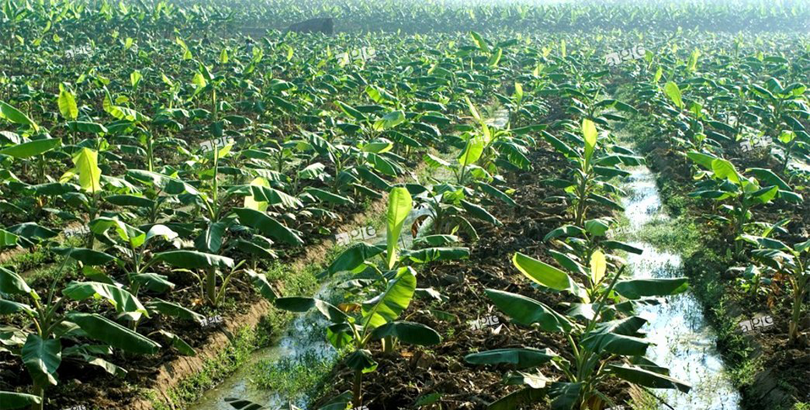
If Bananas are planted with a wide spacing of 1.82 m between rows, 3630 plants would fit in each hectare. The most economical and efficient spacing is 1.82 meters x 1.52 meters. However, the above spacing is only possible with fertigation. Bananas can be planted with higher density at 1.5 meter x 1.5 meter but yields are poor due to competition for sunlight. The recommended distance is at 2.0 meter x 2.5 meter with 2,000 plants per hectare since that is the standard distance to minimize Sigatoka.
Banana Plantation Planting Method
Polybags should be separated from the banana plant without disturbing the root ball of the plant and then plants should be planted in the prepared pits keeping the pseudo-stem 2 cm below the ground level. Soil around the plant should be gently pressed. Deep planting of banana should be avoided.
Banana Plantation Irrigation
The banana is a water loving plant and requires a large quantity of water for maximum productivity. Bananas require a minimum of 2000 mm to 2500 mm annually or 25 mm per week. Deep watering should be provided during drought conditions to help leach the soil of salt.
Banana plants do not bear fruits without proper irrigation. However, over irrigation must be avoided as excessive water will cause roots to rot as banana roots are poor withdrawal of water. Irrigate the plants immediately after planting in the field. Apply sufficient water and maintain field capacity. In commercial cultivation of banana, an effective way of irrigation should be identified. The best method is drip irrigation as it has excellent advantages over conventional irrigation. Drip irrigation controls the water to be flown and the water will effectively be used at the root system. In areas where water scarcity problem exists, drip irrigation would prove beneficial.
Intercultural Operations
These operations should be carried out on regular basis for better growth and production of the banana plant.
Intercropping a Banana Plantation
The root system of banana is easily damaged by inter-cultivation hence use of intercropping is not preferred. However, short durational crops (40 to 60 days) like Green gram, cowpea, and daincha are considered as green manuring crops.Intercropping is only possible during initial year. Crops from cucurbitaceous family should be avoided as these carry viruses and diseases.
Mulching a Banana Plantation
Mulch conserves soil moisture and keeps the soil cool as they block direct sunlight exposure. It also slows down the growth of weeds as it blocks the weeds from receiving sunlight thus minimizing labor work. The mulch should be kept at least 40 to 50 cm from the base of the plant as it generates heat when decomposing. This practice adds nutrients to the top soil and also reduces fungal diseases.
Weed Control in Banana Plantation
Banana plants must be kept weed free because banana plants grow in slower phase with the presence of weeds because part of the water and nutrients are absorbed by the weeds. Five or Six manual weeding operations should be carried out. Once the banana plants reach mature stage, weed growth is automatically controlled. Another option to control weeds is to have thick mulch at the base of the plants. Mulching also helps in retaining moisture as well as controls the erosion in case of heavy rains. Mulching material will eventually decompose and work as organic manure.
Removal of Male Banana Buds
In banana farming removal of male buds helps fruit development and increases bunch weight as well. Male buds should be removed from the last 1 to-2 small hands with a clean cut keeping a single finger in the last hand.
Bunch Spray and Bunch Covering
Weed Control in Banana Plantations
Intercropping a Banana Plantation
Spray of monocrotophos of 0.2% after emergence of all hands takes care of the thrips. Thrips attack discolors the fruit skin and makes it unattractive.
Covering bunch using dried leaves of the plant is economical and prevents the bunch from direct exposure to sunlight. Bunch cover increases the quality of fruit. But in rainy season this practice should be avoided. Sleeving of bunch should be done to protect bananas against dust, spray residue, insect and birds. For this, blue plastic sleeves are recommended. This also increases temperature around developing bunch and helps in early maturity.
Pests and Diseases
Banana plants are prone to viral diseases, fungal diseases and insect pests. Because of this, there is a huge impact on fruit size, quality and yield. For control measures of these pests and diseases, contact local department of agriculture or any agricultural university.
Propping up Bananas
As the banana bunch is heavy, the plant goes out of balance and the bearing plant may dislodge and production and quality can be adversely affected. Hence, they should be propped with the help of two bamboos forming a triangle by placing them against the stems on the leaning side. This also helps in uniform development of fruit bunch.
Manures and Fertilizers
Banana crop requires nitrogen, phosphorus, potassium with a ratio of 3:1:6 and other micronutrients to ensure the plants grow vigorously. These must be applied based on weather condition and plants age.
Harvesting Bananas
The banana crop becomes ready for harvesting within 11 to 12 months of planting. First ratoon crop would be ready by 8 to 10 month from the harvesting of the main crop and second ratoon by 8 to 9 months after the second crop. Harvest when fingers are fairly evenly rounded. General practice is to harvest when fingers of second hand are 3/4 rounded. Alternative, for tree-ripened fruit, cut only those hands that are ripened and leave the remaining for other day. These Bananas taste the best. However, this process is time consuming and not feasible. The mother plant should be cut off after harvest as the plant can never produce again. Harvest may be delayed up to 100 to 120 days after opening of the first hand. Harvested bunch should generally be collected in well padded tray or basket and brought to the collection site. Bunches should be kept out of light after harvest, since this hastens ripening and softening.
For local consumption, 6 to 15 hands should be often left on stalks and sold to retailers or in local markets. For exporting, hands should be cut into units of 4 to 16 fingers, graded for both length and girth, and carefully placed in polylined boxes to hold different weights depending on export requirements.
Banana Plantation Yields
Over a period to 28 to 32 months, in banana farming, it is possible to harvest 3 crops i.e. one main crop and two ratoon crops. Under drip irrigation combined with Fertigation yield of banana as high as 100 tonnes per hectare can be obtained with the help of tissue culture technique. If the crop is managed well, the ratoon crops would give similar yield.
Post Harvesting Tasks
Banana crop requires nitrogen, phosphorus, potassium with a ratio of 3:1:6 and other micronutrients to ensure the plants grow vigorously. These must be applied based on weather condition and plants age.
To know more about how Royal farmsteads can assist you with the development and management of your own Banana plantation and to receive a free initial consultation, please call us today on
To know more about Oranges Plantation or to receive a personalized consultation with a Tusconomy representative