
Introduction to Sandalwood
Sandalwood is a semiparasitic plant of the genus Santalum (family Santalaceae), especially the fragrant wood of the true, or white, sandalwood, Santalum album. The approximately 10 species of Santalum are distributed throughout southeastern Asia and the islands of the South Pacific.
Red sandalwood is obtained from the reddish-coloured wood of Pterocarpus santalinus, a Southeast Asian tree of the pea family(Fabaceae). This species may have been the source of the sandalwood used in King Solomon’s temple.
Sandalwood trees are botanically from the European mistletoe family. The trees are found in Pakistan, India, Nepal, Bangladesh, Sri Lanka, Australia, Indonesia, Hawaii, and other Pacific Islands.
Album sandalwood is the best and most expensive amongst all Sandalwood trees. It grows in the Western Ghats and the Kalrayan and Shevaroy mountain range. But due to increased demand and indiscriminate cutting of the tree, Album sandalwood is now a threatened species.
Album sandalwood is the best and most expensive amongst all Sandalwood trees. It grows in the Western Ghats and the Kalrayan and Shevaroy mountain range. But due to increased demand and indiscriminate cutting of the tree, Album sandalwood is now a threatened species.
Sandalwood from the Mysore region in Karnataka and Marayoor forest in Kerala in South India have the highest quality of Sandalwood trees
A true sandalwood tree grows to a height of about 10 metres (33 feet); has leathery leaves in pairs, each opposite the other on the branch; and is partially parasitic on the roots of other tree species.
Sandalwoods are medium-sized semiparasitic trees, and part of the same botanical family as European mistletoe. Notable members of this group are Indian sandalwood (Santalum album) and Australian sandalwood (Santalum spicatum); others in the genus also have fragrant wood. These are found in Pakistan, India, Nepal, Bangladesh, Sri Lanka, Australia, Indonesia, Hawaii, and other Pacific Islands.
Album sandalwood is a threatened species indigenous to South India, and grows in the Western Ghats and a few other mountain ranges such as the Kalrayan and Shevaroy Hills. Although sandalwood trees in India, Pakistan, and Nepal are government-owned and their harvest is controlled, many trees are illegally cut down. According to Plantations International research Sandalwood oil prices have risen to $2,000 per kg recently. Sandalwood from the Mysore region of Karnataka (formerly Mysore), and marayoor forest in Kerala, southern India, is high in quality. New plantations were created with international aid in Tamil Nadu for economic exploitation. In Kununurra in Western Australia, Indian sandalwood is grown on a large scale.
Ellipticum, S. freycinetianum, and S. paniculatum, the Hawaiian sandalwood (ʻiliahi), were also used and considered high quality sandalwood. These three species were exploited between 1790 and 1825 before the supply of trees ran out (a fourth species, S. haleakalae, occurs only in subalpine areas and was never exported). Although S. freycinetianum and S. paniculatum are relatively common today, they have not regained their former abundance or size, and S. ellipticum remains rare.
Spicatum is used by aromatherapists and perfumers. The concentration differs considerably from other Santalum species. In the 1840s, sandalwood was Western Australia’s biggest export earner. Oil was distilled for the first time in 1875, and by the turn of the 20th century, production of Australian sandalwood oil was intermittent. However, in the late 1990s, Western Australian sandalwood oil enjoyed a revival and by 2009 had peaked at more than 20,000 kg (44,000 lb) per year – much of which went to the fragrance industries in Europe. By 2011 a significant percentage of its production was heading to the chewing tobacco industry in India alongside Indian sandalwood – the chewing tobacco market being the largest market for both oils in 2015.
Right from the time trading began in India, Sandalwood is being traded. The Sultan of Mysore declared it a royal tree in 1872 due to it's great value and Sandalwood still continues to retain that place.
Sandalwood is inherent to Indian culture and heritage. It imparts fragrance even to the ace that cuts it, thus becoming the epitome of excellence. Sandalwood has nearly 15 different names in various Indian languages and one of the oldest pieces of Indian literature, the Ramayana (2000 B.C.) has a mention of it.
Sandalwood is an evergreen tree which generally grows in the dry, deciduous forests. It can grow to a height of 20 m and obtain a girth of 1.5m. It thrives best under rainfall conditions of 500-2000 mm and at elevations of 650-1200m. Sandalwood is capable of growing in different kinds of soils like clay, sand, laterite, and loam. Even very poor or rocky soils can support sandalwood. Established plants start fruiting and regenerating naturally.
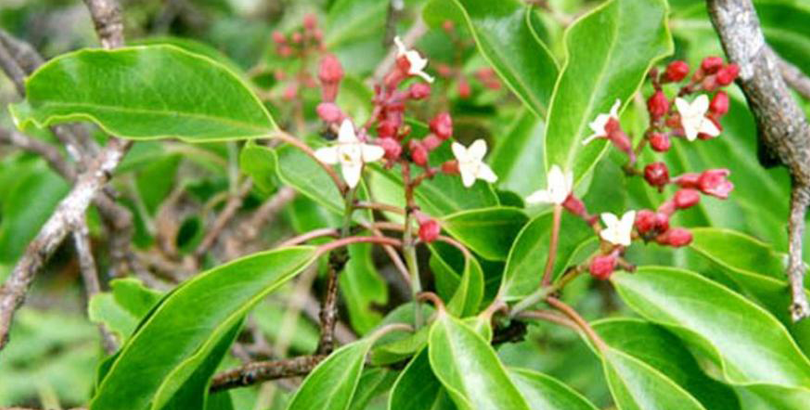
Sandalwood produces red flowers with 4 petals. Flowers are arranged in clusters at the end of the branches. They contain both types of reproductive organs (perfect flowers).
Sandalwood blooms all year round. Flowers attract honey bees and ants, which are responsible for the pollination of these plants.
Fruit of sandalwood is round shaped and pea-sized. It contains one black seed.
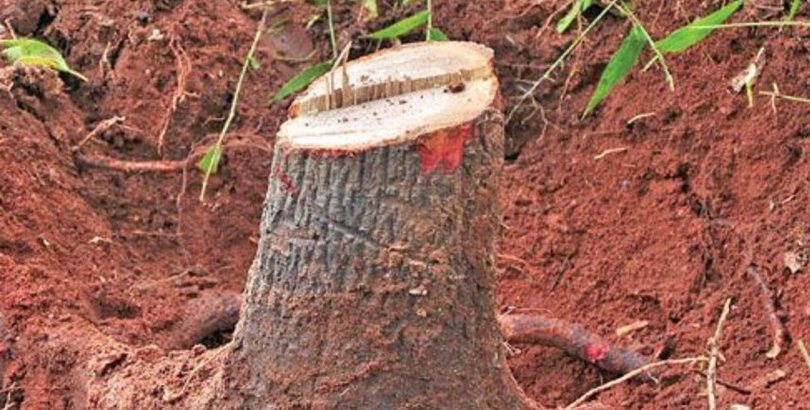
Sandalwood is ready for the harvest at the age of 30 to 60 years. Trees can be left in the wild during a period of couple of months (white termites remove bark and sapwood and leave heartwood, basic source of essential oils), or it can be processed mechanically.
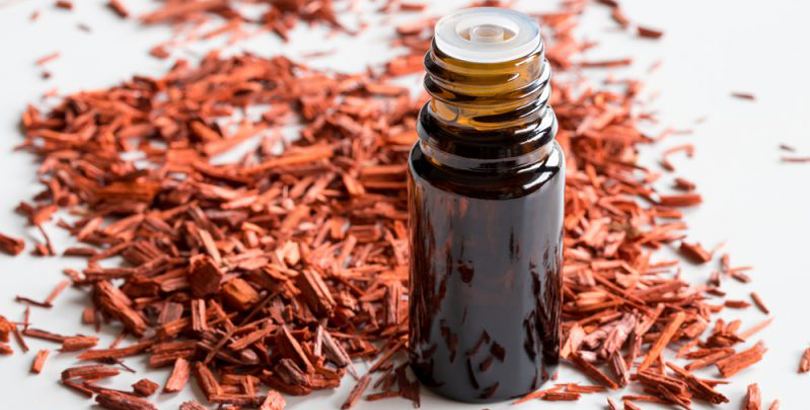
Both tree and roots contain a yellow aromatic oil, called sandalwood oil, the odour of which persists for years in such articles as ornamental boxes, furniture, and fans made of the white sapwood. The oil is obtained by steam distillation of the wood and is used in perfumes, soaps, candles, incense, and folk medicines. Powdered sandalwood is used in the paste applied to make Brahmancaste marks and in sachets for scenting clothes.
Sandalwood trees have been cultivated since antiquity for their yellowish heartwood, which plays a major role in many Oriental funeral ceremonies and religious rites. The trees are slow growing, usually taking about 30 years for the heartwood to reach an economically useful thickness.
In the 1840s, sandalwood was Western Australia’s biggest export earner. Oil was distilled for the first time in 1875, and by the turn of the 20th century, production of Australian sandalwood oil was intermittent. However, in the late 1990s, Western Australian sandalwood oil enjoyed a revival and by 2009 had peaked at more than 20,000 kg (44,000 lb) per year – much of which went to the fragrance industries in Europe.
Uses of Sandalwood
Sandalwood is used in treatment of inflammation, skin disorders, rashes, cough, fever, flu, hypertension and restlessness. Essential oils are used to improve functioning of liver, heart and stomach and to strengthen the gums of teeth and muscles.
Essential oils of sandalwood have antispasmodic (relieve spasm of muscles), antibacterial (kill bacteria) and antiviral (kill viruses) properties.
Sandalwood is used in treatment of inflammation, skin disorders, rashes, cough, fever, flu, hypertension and restlessness. Essential oils are used to improve functioning of liver, heart and stomach and to strengthen the gums of teeth and muscles.
Essential oils of sandalwood are used in the industry of perfumes, soaps and lotions. Sandalwood water (“leftover” of steam distillation) is used in the manufacture of aftershaves.
Pieces of sandalwood can be used as ingredient of chewing tobacco.
Ground sandalwood is often used for the preparation of incense sticks.
Hardwood of sandalwood was used for building the temples and statues of Hindu gods and elephants in India. Due to belief that sandalwood plays role in reincarnation, essential oils are often used in the funeral rituals and for embalming.
For centuries, sandalwood has reserved a place of dignity and respect in many civilizations and religions of the world, especially in the Hindu Religion, where it is considered holy and indispensable in almost all of the social and religious rituals and ceremonies, from the birth of an individual until their death. In every step, sandalwood is required. It is offered to the various Hindu gods and goddesses, used in decorating babies on their birthdays, used in marriages to decorate brides and bridegrooms, mixed with flowers and other ceremonial offerings, used to embalm bodies and foreheads which is a common practice among people of many communities in India, and it is also burnt with the pyre when cremating the dead.
Sandalwood oil and the paste of sandalwood is used in medicines, skin and beauty treatments and numerous industrial products including mouth fresheners, edibles, incense sticks, room fresheners, deodorants, perfumes, soaps, lotions, and creams. It has some really remarkable medicinal properties.
Why should you invest in Sandalwood??
Sandalwood estates has been collaborating with community leaders in India by providing systems and other sandalwood end production processes and commercial assistance. Recently the Indian Government relaxed its restrictions on the export and production of sandalwood within India as a result once redundant factories and plantations are now springing back into commercial life. Throughout the world “Indian” Sandalwood is known as the best and most consistent in quality and is after all its indigenous home, now Sandalwood estates is working with the same group who already have one of South East Asia’s largest Sandalwood processing factories to develop the same community led program managed under a commercial umbrella to provide the market with sustainable, consistent and a trusted source for genuine Indian Sandalwood.
If you are interested in owning a Sandalwood trees and becoming a part of the growing agroforestry business, contact us at.....