
Introduction to Oranges
Sweet oranges have been mentioned in Chinese literature as early as 314 BC. As of 1987, orange trees were found to be the most cultivated fruit tree in the world. Orange trees are widely grown in tropical and subtropical climates for their sweet fruit. The fruit of the orange tree can be eaten fresh, or processed for its juice or fragrant peel. As of 2012, sweet oranges accounted for approximately 70% of citrus production. In 2013, 71.4 million metric tons of oranges were grown worldwide, production being highest in Brazil and the U.S. states of Florida and California.
Orange is the fruit of the citrus species Citrus sinensis in the family Rutaceae. The fruit of the Citrus sinensis is considered a sweet orange, whereas the fruit of the Citrus × aurantium is considered a bitter orange. The sweet orange reproduces asexually (apomixis through nucellar embryony); varieties of sweet orange arise through mutations. The orange is a hybrid, between pomelo (Citrus maxima) and mandarin (Citrus reticulata). It has genes that are ~25% pomelo and ~75% mandarin; however, it is not a simple backcrossed BC1 hybrid, but hybridized over multiple generations. The chloroplast genes, and therefore the maternal line, seem to be pomelo. The sweet orange has had its full genome sequenced.
The Orange is one of the top citrus fruits grown after banana and apple.The most important commercial citrus species are mandarin, sweet orange and acid lime.
Oranges have great economic importance due to its wide range of uses and benefits
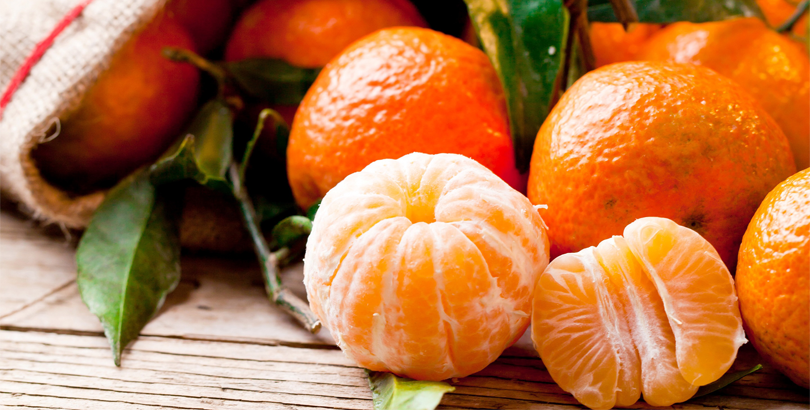
Oranges are rich in vitamins like C, A, B and phosphorus. They can be consumed fresh or in the form of juice, squash, syrup and jam. Oranges are main source of peel oil, citric acid and cosmetics. These orange products have an excellent value in the international market. Orange tree belongs to the family of “Rutaceae” and genus of “Citrus”.
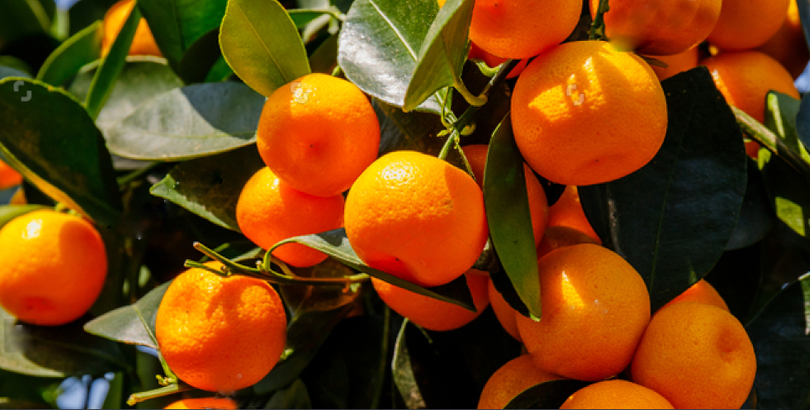
Oranges are round orange-coloured fruits that grow on a tree which can reach up to 10 meters of height. Orange trees have dark green shiny leaves and small white flowers with five petals. The orange tree flowers smell very sweet and attract many bees. Oranges can be grown in pots, containers even in backyards. Commercial cultivation of oranges is very successful and profitable when proper cultivation practices are followed. Pest and disease management is very important in orange
cultivation as these plants are often prone to different pests and diseases.
There are several different types of sweet oranges grown across Asia and other parts of world. However, one of the most common types is called the “Valencia” orange. This cultivar (variety) comes from Spain and is also grown in Africa and Australia. Mandarin Orange is another variety which is very famous in Indian citrus cultivation.The ‘sweet orange’ is the kind that is most often eaten today in the world. The sweet oranges are originally from Asia but are now grown in many parts of the world.
Major Orange Production Countries:
The top 10 orange production countries are Brazil, USA, China, India, Mexico, Spain, Egypt, Turkey, Italy and South Africa. In Asia, China is the largest producer of oranges followed by India.In India, oranges are primarily grown in the states of Tamil Nadu, Kerala, Uttaranchal, Bihar, Orissa, Assam, Gujarat, Maharashtra, Andhra Pradesh, Telangana, Punjab and Karnataka.
Health benefits of oranges
- Oranges contain phytochemicals that protect against cancer, including that of the skin, lung, breast, stomach and colon.
- Orange juice can help prevent kidney diseases and reduces the risk of kidney stones.
- Mandarin oranges fight liver cancer, according to studies. This may be due in part to vitamin A compounds known as carotenoids.
- Oranges lower cholesterol :Since they’re full of soluble fiber, oranges are helpful in lowering cholesterol.
- Oranges fight against viral infections. Studies show that the abundance of polyphenols in oranges protects against viral infections.
- They relieve constipation. Oranges are full of dietary fiber, which stimulates digestive juices and relieves constipation.
- . They aid in good eye health and protect vision. Oranges are rich in carotenoid compounds, which are converted to vitamin A and help prevent macular degeneration.
- They regulate high blood pressure.The flavonoid hesperidin found in oranges helps regulate high blood pressure, and the magnesium in oranges helps maintain blood pressure.
- They protect skin. Oranges are full of beta-carotene, which is a powerful antioxidant that protects the cells from damage. Beta-carotene protects the skin from free radicals and helps prevent the signs of aging.
- Oranges alkalize the body.Although oranges are acidic before you digest them, they contain many alkaline minerals that help to balance out the bodyafter they are digested.
- Oranges have a low glycemic index and eating them in moderation does not cause a rise in blood sugar.
Requirements for orange plantations
Oranges can be grown both in tropical and sub-tropical climatic conditions up to 1,500 meter(above m.s.l.). However, dry climate with a soil temperature around 25 °C would be optimum for plant root growth. When it comes to best crop growth, dry and arid conditions coupled with well defined summer having low rainfall ranging from 75 cm to 250 cm are most favourable conditions. Orange crop is very sensitive to frost conditions and high humid conditions. During hot summers, hot winds causes the crop to shed flowers and young fruits. For achieving good yield of the crop, it is necessary to maintain favourable temperatures throughout its growth period.
If the orange crop is planned on large scale or commercial line, one should opt for soil testing to find out the suitability and fertility of the soil. Oranges can be grown in wide variety of soils such as alluvial, sandy loam to loam, red sand soils to black clayey soils.. However, soil properties like soil reaction, soil fertility, drainage, free lime and salt concentrations are some important factors of soil to be used for orange cultivation. Deep and well-drained light loamy soils are the best for orange plantation. Soil pH of 6.0 to 7.5 is the best for orange cultivation.
In South East Asia, Orange seedlings are mostly transplanted to main field after commencement of monsoon (month of July-August). Budding should preferably be done in last week of January month or first week of February month following the T or shield budding method.
Site selection and land preparation is very important in orange cultivation. When this crop is grown commercially, make sure the site is closer to markets and has transport facility. As the flower and fruit drops are common during summer due to hot winds, it is advised to provide windbreaks on the sides from which heavy winds are possible. One can opt to grow eucalyptus, Jamun (Plum) and Mulberry trees for windbreaks.
With the help of tractor, land should be cross ploughed and levelled by crushing any clods. Make sure all the weeds from previous crops are removed. This is the major land preparation required for the orange crop.
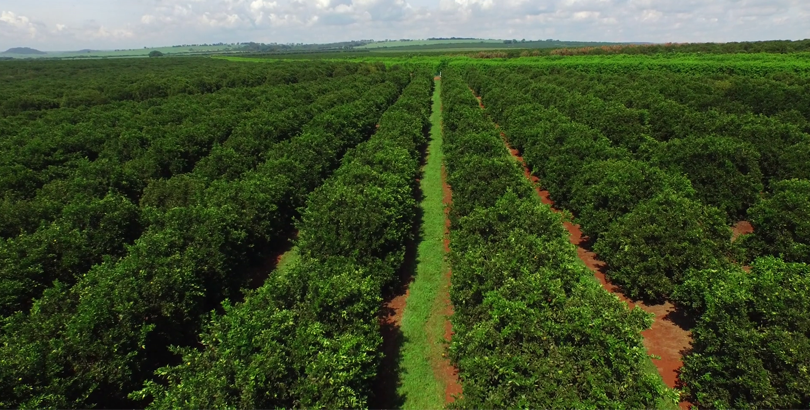
Orange trees are propagated by seeds and vegetatively propagated by T-budding. However, Budded plants are the best planting materials for quick growth and high yielding. When it comes to planting Pits size of 75 cm x 75 cm x 75 cm at 7 meter x 7 meter spacing should be dug and filled the pits with top soil and 10 kg of well decomposed farmyard manure (FYM). Budded plants should be placed in the center of the pits and staked. Usually, spacing depends on cultivar, soil type and type of method followed. For high density planting, spacing would be less.
120 plants per 1 acre is considered for closed spacing.
Irrigation is critical step in orange cultivation as citrus trees usually require more water when compared to other fruit crops due to recurrent growth and development. Irrigation depends on factors like soil type, climatic conditions and age of plants. Irrigation should be applied at every 5-8 days interval from March to June and at every 9-12 days interval during November- February. Orange plants are sensitive to water stagnation; hence water logging the tree trunk should be avoided.
Irrigate the orange orchard after transplanting. A grown-up orange tree requires about 20-25 irrigations in a year, amounting about 1,400 mm of water. It is recommended to go for drip irrigation as it has many advantages.
Drip irrigation helps the water to be applied at the plant root system.
As systematic watering, it improves plant growth ,quality and yield of the crop.
Water wastage is reduced about 60% when compared to flood irrigation.
As water is supplied at root system, fertilizers applied at roots are used very efficiently.
It improves nutrient concentration and reduces soil erosion as compared to flood irrigation.
Land levelling work is minimized and so is the labour requirement.
Drip irrigation helps in reducing weeds, pests and diseases.
Crops can be grown any time with drip irrigation.
Amount of water is controlled and can be supplied as per requirement.
Manures and Fertilizers
Applying manures and fertilizers to the orange crop at right stages will result in high yields.
For higher crop yield of the orange plant, carrying out regular intercultural operations is important. As part of this, weed growth should be controlled by mulching. Regular ploughing must be done between tree rows for removing grass weeds. Spading of tree basins should be carried for proper soil aeration and fertilizers absorption. In controlling weeds, chemical weedicides are found to be greatly effective.
For soil moisture conservation and erosion control, mulching is essential. Apart from this, mulching also helps in controlling weed growth and turning it into organic matter. This also reduces the number of irrigation by preventing water evaporation. Mulch material like paddy husk or dry leaves with thickness of 7 to 8 inch can be used in tree basins.
It makes commercial sense for orange growers to earn some extra income by opting for intercropping. Legumes and any vegetable crops can be grown as inter crops during pre-bearing stage (During Initial 3 year period). When growing inter crops, it may need extra care, manure and irrigation along with orange orchard maintenance.However, it is essential to make sure the inter crops don’t compete with nutrients provided for orange trees.
The fruit quality and crop yield is directly impacted by training and pruning of the orange plant. The trees are trained to a single system and any shoot emerging from the portion below the bud union should be nipped off regularly. In order to allow the growth of a strong trunk, all shoots in the first 50- 60 cm from ground level developed in the early stage should be removed. The centre of the plant should remain open. Branches should be well distributed to all sides. Cross twigs and water suckers are to be removed early. The bearing trees require little or no pruning. All diseased, injured and drooping branches and dead wood must be removed periodically for initiating citrus greening. Training of plants should be completed in first three years so that plants attain a mechanically strong canopy. The pruning in pre-bearing trees may be done at any time avoiding the peak winter.
Pests and Diseases
Controlling pests and diseases in orange orchard is very important throughout its growth period.
Pests Found in Orange Cultivation
The main pests found in orange cultivation are black fly, citrus psylla, citrus leaf miner, bark eating caterpillar, mealy bugs, citrus aphids, citrus thrips, fruit fly and mites. These pests cause to produce poor quality fruits and results in low crop yield.
Spraying with insecticides like monocrotophos, phosalone, dimethoate, phosphamidon, and quinalphos depending upon the type of pest infestation has been found to be effective in most cases of these pests.
Diseases Found in Orange Cultivation: The main diseases found in orange cultivation are twig blight, gummosis, damping off, root and collar rot. The affected plants should be sprayed with Ridomil MZ 72, Bavistin, Benomyl etc. depending on the type of infection.
Harvesting Orange
The Orange crop starts yielding fruits from 4th or 5th year depending on the cultivar. The economic life orange tree can be from 20 to 25 years. There may be 2 or 3 crops in a year (summer, rainy season and autumn). Usually, oranges start maturing in 9 to 12 months. Fruits should be harvested when they are fully ripe and attain proper size, attractive colour and acceptable sugar: acid ratio. Within 2 to 3 cycles the mature fruits can be picked.
Post Harvest Tasks
Sweet and mandarin Oranges may be treated with etherel for de¬greening and development of colour. At low temperature below 25°C low quantity of ethylene can set a change in colour. Oranges should be washed, sorted and graded based on sizes before packing in CFB boxes for local markets or exports.
Orange Crop Yields
Like any fruit crop yield of orange depends on many factors like, cultivar (variety) being grown, soil type, climatic conditions and orchard management practices. On an average 25 to 30 tonnes/ha can be obtained. When it comes to yield by individual tree, from fourth or fifth year, 40 to 45 fruits per tree can be expected and the crop stabilizes in the 8th year. Average yield for each tree is about 450 to 500 fruits after stabilization.
Marketing of Oranges
Orange fruits keep well for a long time under ambient conditions and hence can be transported to long distances for marketing. Oranges can be transported to local markets or fruit suppliers can also buy in bulk at the farm. Market value of oranges depends on the season as well as quality of fruit. The price of oranges varies from season to season. For commercial marketing, contact any fruit processing units or export agents.
To know more about how Royal farmsteads can assist you with the development and management of your own Orange plantation and to receive a free initial consultation, please call us today on
To know more about Oranges Plantation or to receive a personalized consultation with a Tusconomy representative